April 10, 2026
Creating a functional and visually appealing outdoor space goes beyond landscaping and décor. One of the most impactful ways to enhance your property is through a strategic outdoor lighting installation. Properly designed lighting not only improves the aesthetic appeal of your home but also adds security, extends the usability of outdoor areas, and ensures safety for family and guests. Whether you're installing pathway lights, accent lighting, or security fixtures, careful planning is essential to maximize both beauty and efficiency.
Understanding the Benefits of Outdoor Lighting
An effective outdoor lighting installation does more than illuminate your yard. It creates ambiance, highlights architectural features, and can increase the overall value of your property. Decorative lighting along pathways or patios enhances usability, while security lighting deters intruders and reduces potential hazards. According to This Old House, experts recommend spacing outdoor light fixtures at least 20 feet apart to maintain even illumination and avoid dark spots. This spacing principle is a crucial consideration when designing your lighting layout.
Additionally, outdoor lighting can help improve visibility in high-traffic areas, such as driveways and walkways, reducing the risk of trips and falls. It also supports functionality for outdoor events, allowing for evening gatherings without compromising on safety or comfort. When executed well, outdoor lighting integrates seamlessly into your landscaping, making your property both attractive and practical.
Key Considerations Before Installation
Before beginning your outdoor lighting project, several factors should guide your planning:
1. Purpose of the Lighting
Determine the primary purpose of your outdoor lighting. Are you aiming to highlight landscaping features, improve security, or create a cozy atmosphere for evening entertaining? Identifying your goals helps you choose the right types of fixtures and placement strategies.
2. Electrical Capacity and Safety
Assess your existing electrical infrastructure. An outdoor lighting installation may require additional circuits, upgrades to your electrical panel, or compliance with local codes. Using a licensed electrician ensures that your wiring meets safety standards, particularly when integrating outdoor outlets, switches, and surge protection. Services such as aluminum wiring remediation and whole-house electrical inspections can prevent hazards, especially in older homes.
3. Fixture Selection
Choosing appropriate fixtures is critical. Weather-resistant materials and finishes, such as aluminum or coated metals, withstand outdoor conditions and reduce maintenance needs. Consider the light intensity, beam spread, and color temperature to complement your home’s design. Options range from low-voltage LED path lights to motion-activated floodlights and decorative lanterns.
4. Energy Efficiency
Energy-efficient lighting minimizes costs while reducing environmental impact. LEDs, for instance, offer long-lasting performance and low energy consumption. Incorporating timers, dimmers, and smart home controls allows for tailored illumination that meets your lifestyle and reduces unnecessary power use.
Planning Your Lighting Layout
Outdoor lighting should balance aesthetics, functionality, and safety. Start with a thorough assessment of your property, including:
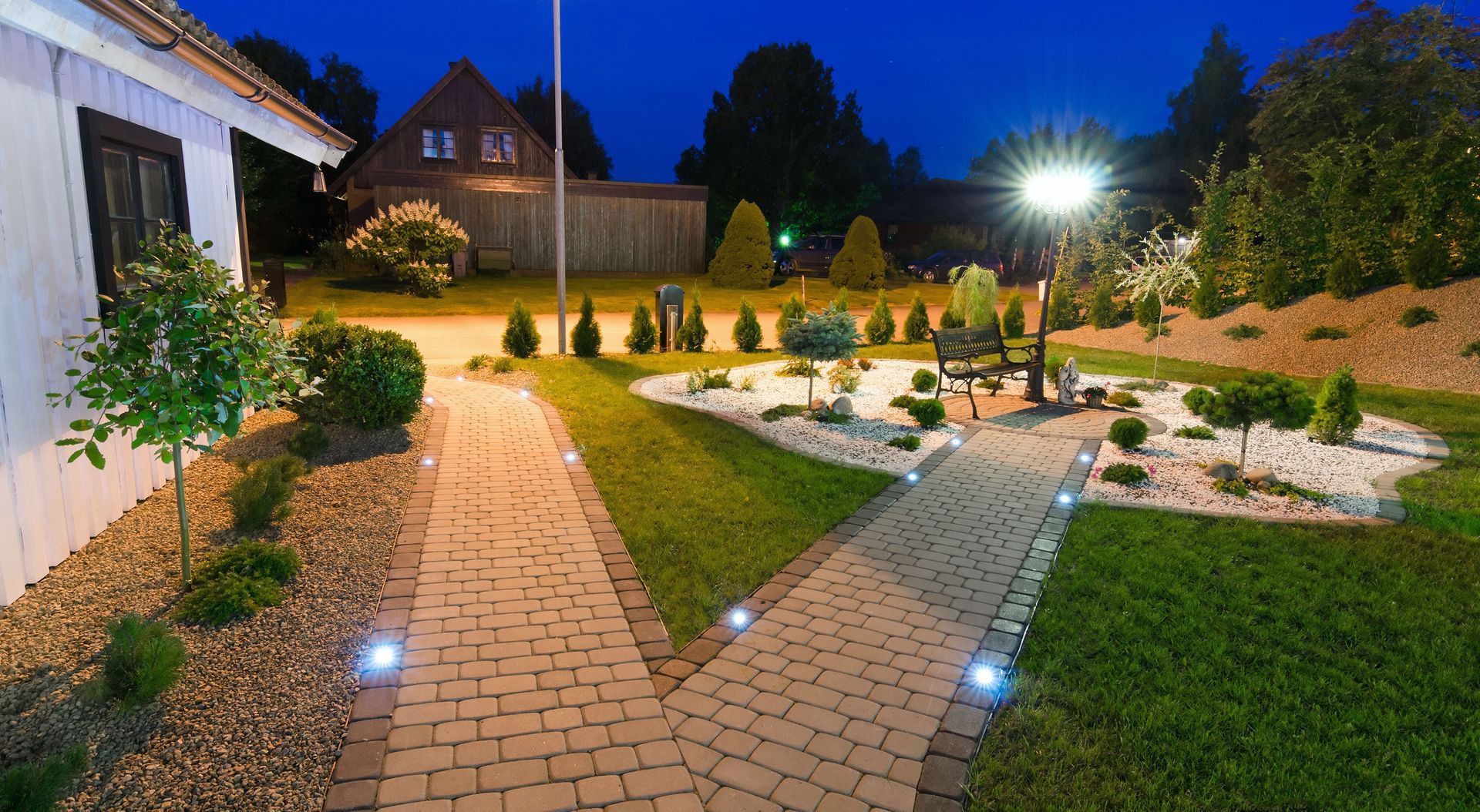
- Walkways and Pathways: Well-lit paths ensure safe navigation at night. Consider accent lighting for steps, garden borders, or uneven terrain.
- Entry Points and Driveways: Security lighting near entrances deters intruders. Motion-activated fixtures can provide illumination only when needed.
- Landscaping Features: Highlight trees, shrubs, or water features with strategically placed accent lights. Use subtle uplighting or downlighting to create depth and texture.
- Patios and Outdoor Living Spaces: Ambient lighting enhances the usability of decks, patios, and pool areas. Recessed lights, string lights, or low-voltage lanterns can create inviting atmospheres.
Placement Strategies for Optimal Impact
Proper fixture placement ensures that your outdoor lighting installation delivers consistent, effective illumination. Consider the following strategies:
1. Height and Angle
Position lights at varying heights to add depth and dimension. Low lights along pathways create subtle guidance, while elevated fixtures on walls or posts provide broader coverage. Adjust angles to prevent glare and reduce shadows that can obscure visibility.
2. Even Spacing
Spacing is essential for uniform illumination. Follow the recommended 20-foot spacing for larger fixtures, while closer spacing works for pathway lights or accent elements. Maintaining consistent distances avoids bright spots and dark gaps, improving both appearance and functionality.
3. Layered Lighting
Combine different types of lighting to achieve a layered effect. Ambient lights establish general illumination, task lights focus on specific areas like a grill or seating area, and accent lights highlight architectural or landscape features. Layering creates a dynamic outdoor environment that feels both functional and welcoming.
4. Safety and Accessibility
Ensure fixtures do not obstruct walkways or create hazards. Outdoor lighting should enhance safety, particularly around steps, pools, or uneven surfaces. Incorporating GFCI outlets and weatherproof fixtures adds another layer of protection against electrical hazards.
Integrating Smart and Automated Features
Modern outdoor lighting installations can be enhanced with smart technology. Automated timers, motion sensors, and app-controlled lights provide convenience, security, and energy efficiency. For example:
- Motion Sensors: Trigger security lights when movement is detected.
- Timers: Automatically turn lights on and off based on the time of day.
- Smart Controls: Adjust brightness or color temperature remotely to suit different occasions or moods.
These features simplify maintenance while ensuring consistent, reliable performance. They also help reduce electricity costs and extend the lifespan of your fixtures.
Maintenance Tips for Longevity
Even the best outdoor lighting requires regular maintenance to perform optimally. Some practical tips include:
- Inspect Fixtures Regularly: Check for corrosion, loose wiring, or broken bulbs. Addressing minor issues prevents more significant problems.
- Clean Lenses and Covers: Dirt and debris can reduce light output. Wipe fixtures periodically to maintain brightness.
- Test Electrical Components: Ensure timers, sensors, and dimmers function correctly. Repair or replace any faulty parts.
- Trim Landscaping Around Lights: Overgrown plants can block illumination. Maintain clear sightlines for both safety and aesthetic purposes.
By incorporating routine inspections and upkeep, you can prolong the life of your lighting system and preserve its intended effect.
Working With Professional Electrical Services
Outdoor lighting installation often intersects with complex electrical work. Partnering with licensed professionals ensures that your system is safe, code-compliant, and built to last. Services can include:
- Electrical Inspections and Repairs: Identify potential hazards, outdated wiring, or code violations.
- Service Upgrades and Panel Work: Support higher-capacity lighting or additional outdoor circuits.
- Decorative and Security Lighting Installation: Achieve both aesthetic and functional goals without compromising safety.
- Emergency Electrical Services: Quickly resolve unexpected outages or malfunctioning fixtures.
Experts can also integrate complementary systems, such as surge protection, home security lighting, and whole-house electrical solutions. This holistic approach ensures a seamless and reliable outdoor lighting.
Special Considerations for Unique Features
Certain outdoor elements require specialized planning:
- Pools and Spas: Use waterproof, low-voltage fixtures to illuminate water features safely.
- Decks and Patios: Recessed or post-mounted lights enhance functionality while maintaining a clean look.
- Trees and Gardens: Up-lighting and spotlights add visual interest without damaging plant life.
- Driveways and Walkways: Ensure illumination guides vehicles and pedestrians safely.
By tailoring your lighting approach to the specific demands of your property, you can create a cohesive, visually striking environment.
Energy Management and Sustainability
Sustainable outdoor lighting practices help lower utility costs and environmental impact. Low-voltage systems, solar-powered lights, and LED technology provide bright illumination with minimal energy use. Automated controls prevent lights from staying on unnecessarily, while strategically placed fixtures optimize coverage without waste. Considering energy efficiency from the outset makes your installation both cost-effective and environmentally responsible.
Planning a successful outdoor lighting installation requires careful consideration of design, placement, electrical infrastructure, and maintenance. From defining your objectives to selecting the right fixtures and spacing them strategically, every detail contributes to the overall effect. Whether illuminating a walkway, accentuating landscaping features, or securing your property, outdoor lighting elevates your home’s appearance and functionality. Enhance your property today with a professional outdoor lighting installation from Bolt Electric, providing expert design, safe wiring, and reliable service.